Multi-Region Full Stack
Running frontend and backend in more than one region—why and what to watch for.
Multi-Region Full Stack
Running frontend and backend in more than one region—why and what to watch for.
Why multi-region
Latency: Users far from your single region see higher latency. Putting app and API in multiple regions (e.g. US, EU, Asia) lets users hit the nearest one. Resilience: If one region fails, traffic can shift to another. Compliance: Some data must stay in a given country; you need a region there.
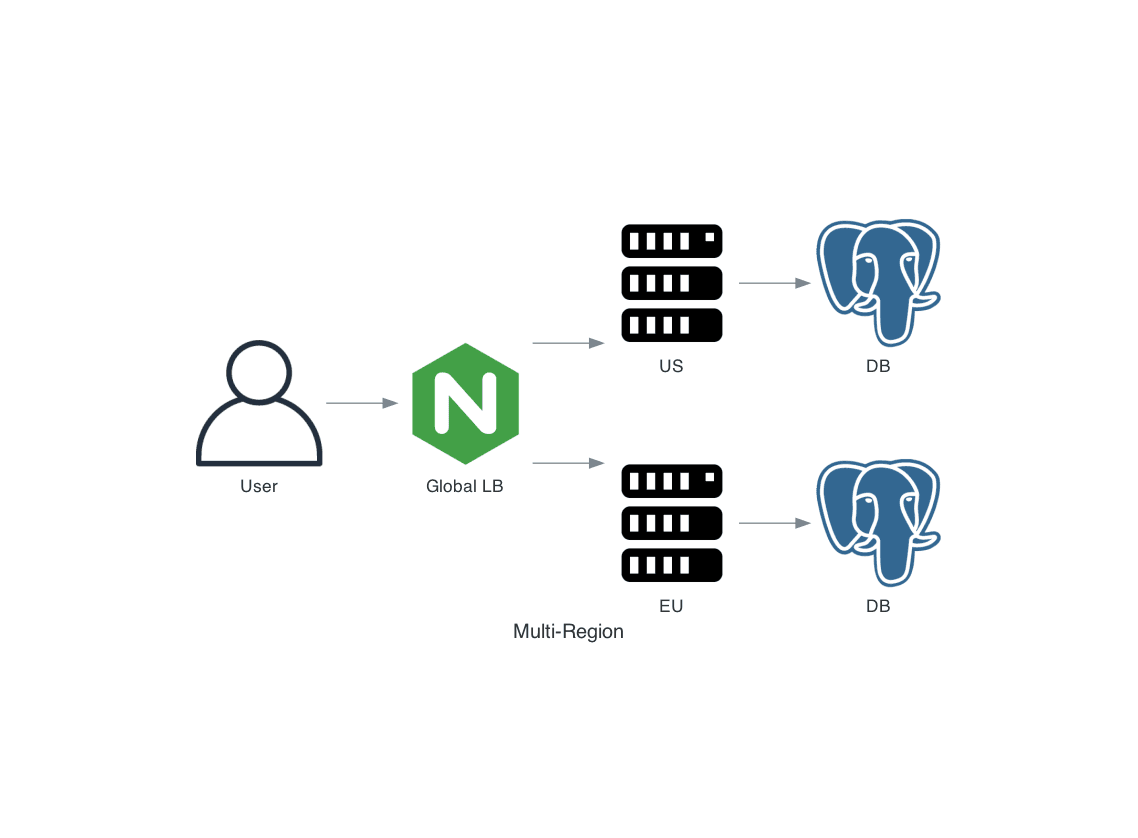
Full stack means: frontend (static or edge) can be distributed by CDN; backend and database need a strategy. Backend can be deployed in several regions (each with its own DB or a global DB). You need routing (DNS or global load balancer) so users reach the right region, and data strategy (replicate, partition, or single global DB).
Data and consistency
If each region has its own database, you have replication and consistency questions: eventual vs strong, conflict resolution. If you use a global database (e.g. PlanetScale, CockroachDB), the DB handles distribution. For read-heavy, cache at the edge and invalidate on write. Multi-region is an advanced topic; start with one region and add regions when latency or resilience demands it.
Routing and failover
Routing: A global load balancer or geo-DNS directs users to the nearest (or preferred) region based on latency or policy. The frontend and API base URL may be the same (e.g. api.example.com) with the resolver returning different IPs per region. Failover: If one region is unhealthy, traffic is shifted to another. Health checks and automated failover require careful testing so you do not fail over unnecessarily or leave a region in a bad state.
Ready to see how this works in the cloud?
Switch to Career Paths for structured paths (e.g. Developer, DevOps) and provider-specific lessons.
View role-based pathsSign in to track your progress and mark lessons complete.
Discussion
Questions? Discuss in the community or start a thread below.
Join DiscordIn-app Q&A
Sign in to start or join a thread.